ARTICLE
Why COR Is Not Enough to Prevent Workplace Deaths
Certificate of Recognition (COR) certification is an effective safety management framework that helps organizations reduce workplace injuries, improve compliance, strengthen worker participation, and build consistent safety systems.
Companies with strong COR programs often achieve excellent audit scores, low injury rates, and favourable WCB performance, but they do not reflect the level of fatality risk within a company.
History has shown that organizations can have:
- Excellent COR audit scores
- Low injury frequency rates
- Strong WCB performance
- Compliant/Green Prequalification Status
and still experience a workplace fatality.
This is because What Hurts Doesn’t Kill. The causes of injuries are not the same as fatalities.
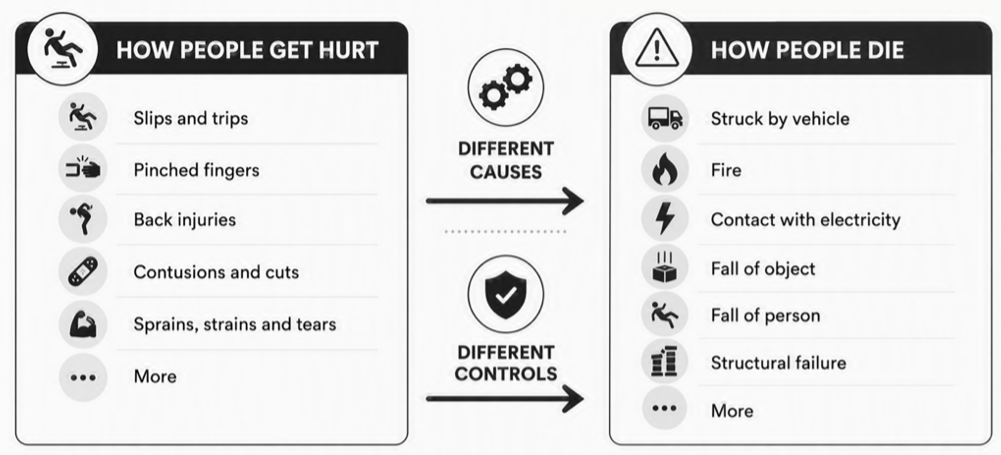
The Key Issue
Traditional safety systems were built on the belief that reducing minor incidents and injuries would also reduce serious injuries and fatalities. While injury rates have declined significantly across many industries, fatality rates have not followed the same trend.
The Fatality Risk Whitespace
COR audits evaluate the quality of a safety management system. WCB statistics measure injury outcomes. Neither identify or manage fatality risk exposure that could lead to a workplace death.
Fatalities often surprise companies. The issue is rarely a lack of safety effort, but that fatality risk remained hidden and unmanaged until a death occurred.
What Companies Must Do Beyond COR
COR remains a valuable tool for building safety systems that reduce injuries, but a strong COR score does not mean protection from workplace death.
Preventing fatalities requires a different system. A system that:
- Identifies what kills. – Energy Sources
- How it kills – Fatal Risks
- What prevents energy from killing – Critical Controls
- Ensures it’s effective through clear performance criteria, assurance and governance